TestSphere, The Making Of

TestSphere

The day was 17th of April, 2015 that I mailed Rosie of Ministry of Testing with an idea I had. The question I posed was whether a Testing Tarot Card deck would be something the community would be interested in.

Rosie had thought of something similar before and wanted to work with me on it.

I wanted to create a tool that is generic enough to suit most contexts and can guide testers to find new and exciting ways to approach the product under test.
I started developing something that eventually took the form of a Testing Tarot set.
– Beren

(italics are snippets from actual conversations.)

Phase 1: A Testing Tarot Card deck. – April, 2015

So cards have two sides:
One side is always printed with one/same logo/design.
The other side is printed with the character.
– Rosie

I had already created a list of concepts that would spark inspiration for your testing and connected this with a Tarot-style character.
This is an extract of how that looked:
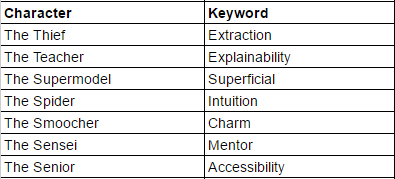
list

Spreadsheet Keywords – Character – Image description

The next step was finding someone who could draw beautiful characters and designs for the cards.
After contacting several people, we found out that this would be very, very costly.
So we decided to go with someone from Fiverr.com who we’d heard good things about.


After completing about 20 drawings for us, she took 175$ and then vanished into thin air. We had less than half a card deck in a particular style which we couldn’t build on further.
Rosie had invested that money for nothing.

That was the first blow.site
Phase 2: The App – November, 2015

While waiting for the characters to come in, I had created a website to give a better overview of the card deck. This drove me into playing around with colours, logo, icons and a name.
Asking advice from people around me, I found someone who wanted to build this into an app.

To help inspire you, TestSphere doesn’t just give you an objective.
It offers an elaborate explanation of the objective and
gives several examples of how to test the objective.
– TestSphere pitch


https://www.youtube.com/watch?v=L673L3nxDus

At that point, we were a year later already. January 2016.
I hadn’t heard as much from Rosie as she was busy with the many other projects. In retrospect, she was right to do so, because I was still searching.
Even if I didn’t know that about myself at the time.


That same month, I was lucky to join 25 other testers on a peer conference: DEWT 6.
I pitched the concept, the website and the app to them.
They felt it had potential, but that it wasn’t quite there yet.

While they were offering constructive criticism, help, support and ideas, I was feeling demoralized. A stone had formed in my stomach.

That was the second blow.

Phase 3: The Card Game – Februari, 2016

Driving home again, I started to get new ideas. Back to basics. A card deck that wasn’t a fluffy fortune telling game, but a useful tool of learning and knowledge sharing.

Again I rethought the list of concepts, form and design of the card deck.
I introduced different dimensions and investigated more concepts to add to the deck. Real, useful and specific test related concepts that have the potential to get testers passionately talking and thinking.

Here’s an example of 9 cards of the first version of TestSphere: pat-3
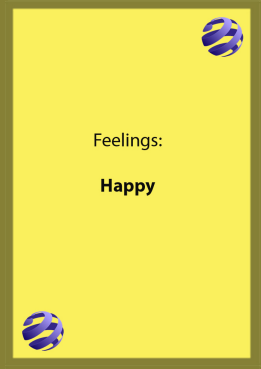
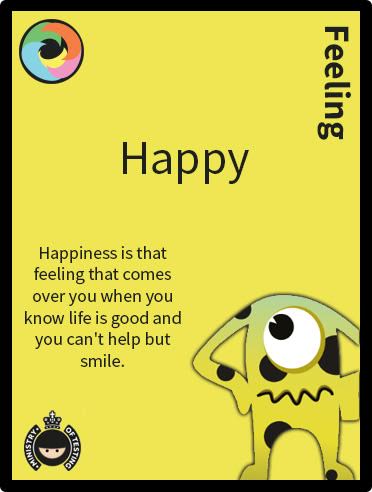
happycard3

more-concepts

The focus shifted from fortune telling and test ideas to learning and knowledge sharing.


I pitched the new idea at TestBash Brighton as a 99-second talk and that was the moment it got picked up in earnest.
Rosie wanted to get it ready for TestBash Manchester. Marcel Gehlen tested out the game and offered a boatload of feedback.

In total: We liked the cards very much, we have some ideas how we can integrate them in our team / work and we think they add value. For gaming purposes we wanted more rules. If you ever come up with a stricter gaming rule set we are happy to try that out for you.
– Marcel Gehlen

Phase 4: TestSphere – Oktober, 2016

We further expanded on the cards, with examples that approach the concepts from different angles.
A real designer from MoT, Thomas Harvey, joined in and made it look awesome.
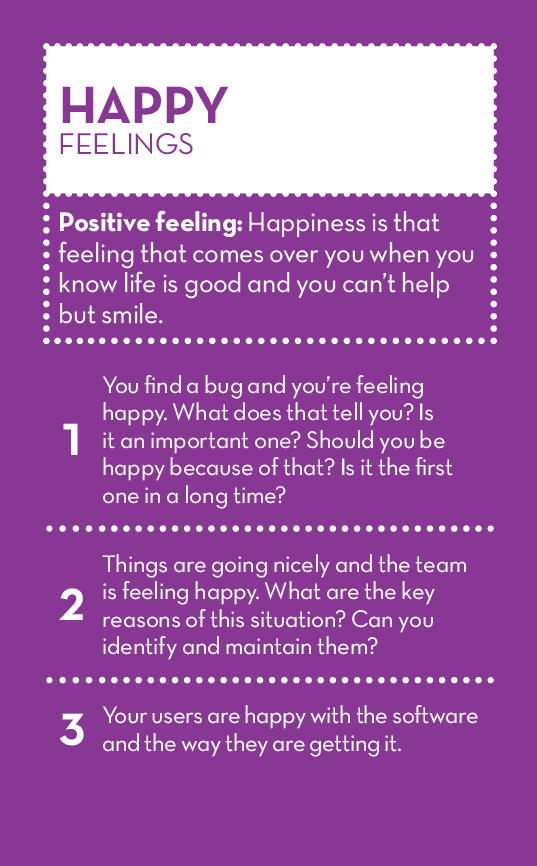
3-feelings23-feelings21

This is a product that can be used in many different ways and taps into your experiences, potential and creativity.
Whether you are an experienced developer or junior tester, this game will have you dig deeper and learn from each other.

TestSphere brings out the potential in you.


Phase 5: The Crowdfunding platform – Januari, 2017

We’ve come this far together. All the people who stood by me, supported me and offered advice and work:

Rosie, Marcel Gehlen, Melissa Eaden, Thomas Harvey, Dwayne Slootmans, Bert Lerno, Ben Van Daele and my wife.

Ministry of Testing have invested £20,000 for design, printing and handling.
In order to make that money back, we’ll need to sell about 1,000 card decks.
At the moment of writing, we’ve sold 220.

You can help us take this story further.
Inform your manager, your development team, your marketing team. Get them excited about TestSphere.

Get it at the Ministry of Testing Store.testsphere-15_1024x1024
Phase 6: ???

The App, revisited?
An extension on the Ministry of Testing Dojo, a great library of real life stories?

All we know is, this is far from over. We’re taking this further!

A Tale of Two Conferences

Conferences

The past few weeks have been hectic for me. Hell, the last 6 months have been.
And it doesn’t look to be cooling down though, with Test Sphere needing a lot of new and uncharted attention.

I take this time to reflect upon the two conferences I’ve had the pleasure of speaking at:
Test Bash Manchester and EuroStar 2016 in Stockholm.

Similarities

The goal for both conferences was to meet as many people as possible, participate in discussions and learn from them, see what the hot subjects are in Testing and introduce Test Sphere to as many people as I can.
I was alone for both, but knew people at each conference. This enabled me to move between groups, but also gave me a ‘safe place’ to return to when fatigue strikes.

I was going to participate in every meetup, every extra activity and fill the glass to the brim.


Test Bash Manchester

I drove up to Manchester. That’s a 10 hour travel from Belgium,but god, England is beautiful in Autumn. Even from the highway you can enjoy the orange-and-yellow branded leaves that fill the landscape.

Once I arrived at Old Trafford, I called Richard and he invited me to join him at a bar.
The plans he and Rosie have for Ministry of Testing are incredible and I couldn’t help but wanting to participate in it.

And that’s the beauty of Ministry of Testing and Test Bash. You feel like one of the organizers. It’s completely up to you: Step up, take any of the chances that are given to you and you’ll be supported by the community to do more and get to the next level.
Test Bash makes everyone valuable. It makes everyone feel like a part of something greater. A community of testers that feels inclusive, open and exceptionally warm.

I drove back in one stretch, arrived late in the evening but still felt energized to last for days. That’s what Test Bash does to me.


Eurostar Stockholm

It’s huge. There’s so much going on I feel I’ve barely scratched the surface.
I stayed in Stockholm for 5 days and try to do as much as I possibly could. But having to choose between 4 different talks left me feeling as if I was losing every time.

The talks I attended were generally very interesting and I’ve taken away quite a few explicit ideas for my day-to-day work and probably more ideas that aren’t as concrete, but will re-surface when the need arises. Especially Alexandra Sladebeck and Liz Keogh‘s talks and ideas resonated with me.

There are so many big names in testing speaking and attending that I was seeing stars. Because I wanted to spread the good word of Test Sphere and looked for a few apostles to do so too, I approached most of them and tried to convince them to do workshops with the cards.
These Testing Stars are incredibly friendly and always up for a chat. They are interested in what you have to say and will give you things to think about.

This is the big advantage of EuroStar over Test Bash: Tons of opportunities and there is a much broader reach.

But this has a negative side too:
There is a central hall where most time is spent. It’s filled with vendors and companies that seem completely disconnected with what’s being talked about in the sessions.
It is my interpretation that this central hall fixates on Repetition in testing and that most talks advocate for Diversity and Variation.
That frightens me. Especially as Jon Bach revealed 50% of the attendees of his talk considered themselves Test Managers.

The late night activities proved to be exactly what I imagined them to be. Good food, drinks, discussions, getting to know each other better and forging relationships.


To summarize

Test Bash made me feel at home, welcomed and valued. EuroStar gave me the impression I was certainly welcome but still a newcomer and was ‘on my way to become a member’.
Both feelings are good. One gives me a safe environment and the other challenges me.

I left EuroStar with many questions and things to consider, such as the state of our craft vs. the state of the testing market and why I want to become a speaker. Test Bash made speaking feel like a natural next step.
Asking questions and introspection are necessary, feeling encouraged is too.

Both conferences offered a ton of ideas to consider and many opportunities to act on. Workshops, collaborations, job prospects and possible sponsors for Test Sphere.

And to the question of “why I signed up to become a speaker in the first place?”, the answer is: People.
Anything I do and want to do well is because of my love for good and honest people.
I need that, in order to feel happy.
I want to move forward with teams and grow everyone around me by any means necessary.
To achieve this, I first have to meet all these wonderful people.

Such as Marcel and Ard:

cvsjwtxwaaa9mwz unnamed

We-Were-Testers

Complaining

I’m writing this from my hotel room in Stockholm, after attending and conferring at Eurostar 2016. I’ve thoroughly enjoyed it and was able to meet so many different and passionate testers from places I didn’t even know had testers.

But this experience was somewhat spoiled by something completely different.
Here’s a few things that get me all riled up: Pokémon that run away and injustice. (amongst other things)

Today I’m complaining about injustice.

The Context

This injustice comes from a source that I had hoped valued integrity and transparency as much as it marketed to be: We-Are-Testers.com. (WAT)
They provide a service, like many other crowd testing companies, that links a customer with specific needs to a number of testers who are willing to jump at the opportunity to test something new AND make a few extra bucks while doing it.

I welcome this idea as it offers me the chance to do some extra testing, but also get some pocket-money to spend.
This mission, I had two days time to test an application on an Iphone and come up with linguistic issues in it.

Pretty easy right? Especially because all the Dutch text I had to review seemed to be copy pasted from a Google translate service.

However, some constraints hindered me: Only two days of testing were foreseen and the first day I spent an hour trying to install the app, only to find out the configuration of the install thingy didn’t work for me. An admin from WAT had to correct this for me.

The second day I was able to test for two hours before the deadline.
I logged 18 bugs, which would amount to maximum 144 EUR.

how-to-report-bugs

All required fields were filled in, as per agreement. Steps, expected outcome and actual outcome were all given as well as any other required fields. (How else would I be able to submit the bug?!)

Later, the next day, mails came flying in. INCOMPLETE, INCOMPLETE, INCOMPLETE.

Wait a second, there seems to be something wrong…
I hadn’t included screenshots.
Ok, I agree that a screenshot is pretty handy to have in most bugs.
HOWEVER, in this context, with two hours time to find as many bugs as possible, making, uploading, downloading, linking,… screenshots would heavily cut into my bug-finding time.

Steps, the name of the screen where the bug was found, the actual text and what it should become had to be more than enough for meager text issues.

In any case, for the three hours of work I wouldn’t see a penny.
And me being me, I kind of want to make a problem out of that.

Gathering evidence

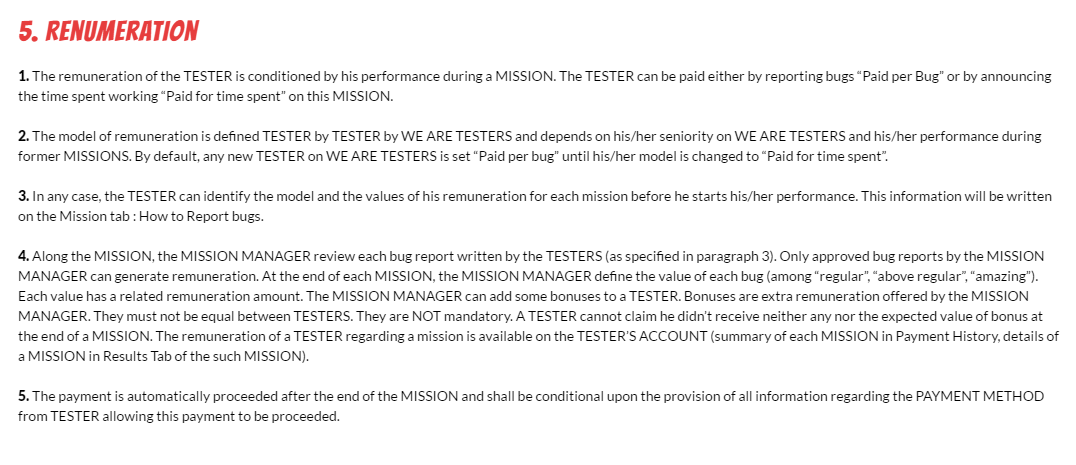
payment-policy how-to-report-bugs

The Discussion

I contacted the moderators and spokespeople from WAT, who are generally really nice guys and girls, to ask them to look into my situation.

Argument 1: Their website’s “Payment Policy” doesn’t mention Screenshots are a requisite for payout. It specifically says attachment only if relevant.

Argument 2: The mission’s “How to report a bug” doesn’t mention Screenshots are a requisite for a complete bug.

Argument 3: If Screenshots are a necessity for this project, please please please make the input field for screenshots a required field?

This is a clear miscommunication, so I gave them time to find out how they’d handle my situation.
Today I heard that I wouldn’t get a dime for my efforts, that it was unfortunate but that it was virtually my own fault.

reply

My point is not whether screenshots should or shouldn’t be added to bugs.
My point is that WAT is telling me I should not be paid because I didn’t adhere to a rule that I can’t find anywhere in their Terms of Agreement, Payment Policy, FAQ or Mission Description.

They did offer four extra hours to insert the screenshots. At noon. While I’m at work. Thanks a lot!

They argue that the devs need screenshots, but frankly, that’s not my problem.
WAT provides a service to the devs. I provide a service to WAT.

WAT should carry the burden of handling communication errors on their part,
And I shouldn’t be the one to suffer from the gaps they leave.

I’m pretty sure those bugs will be fixed in the next version. But regardless of that, not paying people because of rules applied by a third party seems kind of illegal to me.

If you don’t agree, let me know.

remuneration

Consult the TestSphere

TestSphere

Last Friday was TestBash Manchester and I’ve enjoyed it thoroughly.
The talks are inspiring, the organisation is impeccable, facilitators are the friendliest people ever and then there’s the people that attend:

All these speakers, listeners, organizers, attendants,… make you feel right at home.
They are what make every edition of Test Bash legendary.

This time, I got the privilege of meeting a whole ton of them while handing out a new card game Rosie and me put together.

testsphere


TestSphere: The tool

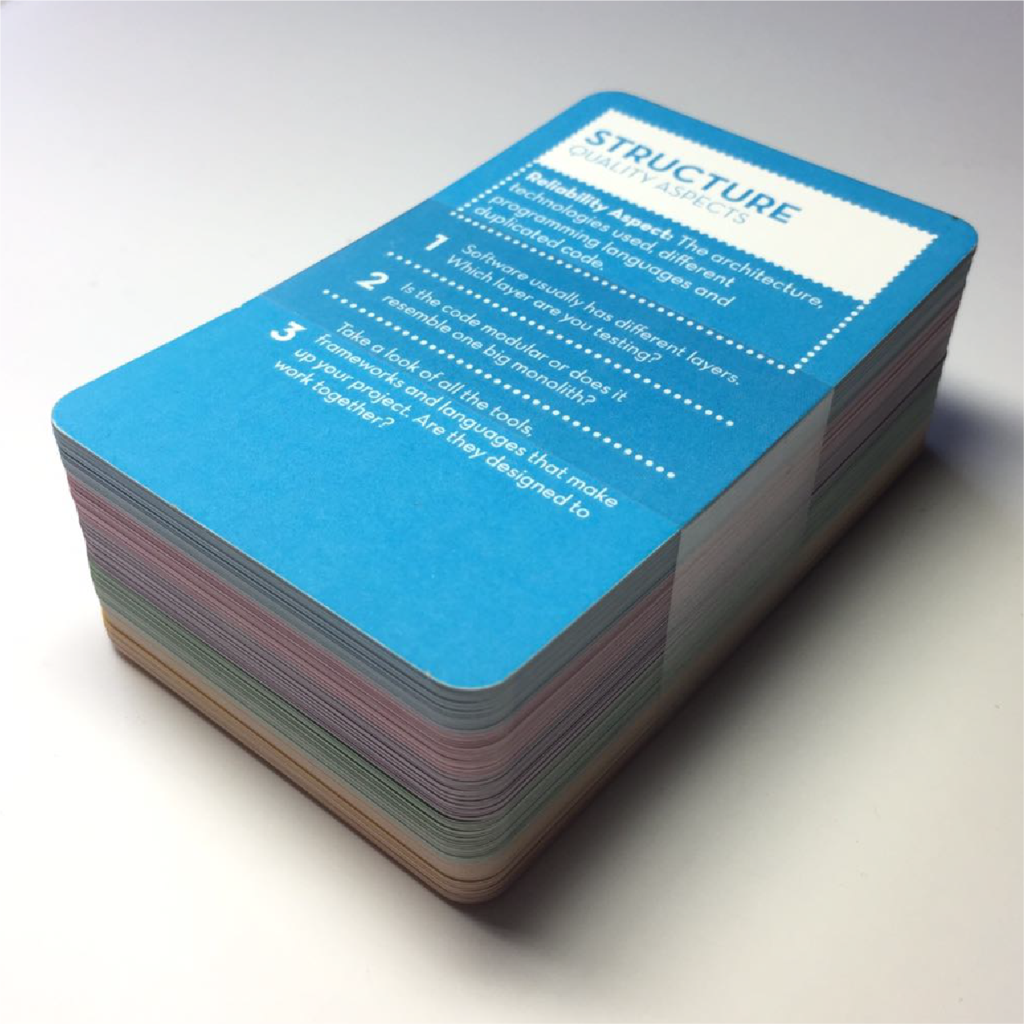
TestSphere is an idea that has been worked on for two years, has seen 5 different implementations and eventually came alive as a 100-card card deck.

A hundred cards, each featuring one keyword that has something to do with testing.
This keyword is further explained with:

  • A category:
    • Quality aspects
    • Techniques
    • Heuristics
    • Patterns
    • Feelings
  • A slogan
  • Three examples of how this keyword could impact your testing

That’s it! One hundred cards full of test-vocabulary and inspiration.
Can you already imagine how you could use that?

testsphere

TestSphere: The Ice Breaker

Step 1: Spot a lone tester
Step 2: Walk up to them and draw a random TestSphere Card i.e. “Equivalence Partitioning”
Step 3: Ask: “How has “Equivalence Partitioning” affected your testing? Do you have a story or experience to share about that?

What follows is that person thinking a few seconds and eventually give you an interesting story that is the beginning what possibly is a good discussion on that keyword.
Another thing that could happen is the person not understanding what you mean. This gives you the opportunity to practice explaining your testing.
Either way, you’ll have started a discussion where you can coach, teach and learn at the same time.

Additionally: Just keep the cards on your desk at work. Developers, Business people, Managers who come to your desk will say “Ooh, shiny colours! What’s that?”.
Before you know it, you’re teaching your coworkers a thing or two about testing.

testsphere

TestSphere: The Storytelling Game

Step 1: Find a group of 4 to 8 persons
Step 2: Divide the deck by category (20 cards each)
Step 3: Depending on the experience of the group: reveal one or more cards
Step 4: As soon as one person can think of a story that features all revealed cards he or she knocks on the table
Step 5: Tell the story
Step 6: This person takes the revealed cards as full points
Step 7: Other people can also tell their stories to get unrevealed cards for half points.

The person that gets X points first or most points by X time wins.
Easy right? You’ve just gotten a whole group of people thinking deeply about their previous testing experiences and put those experiences to verse.

Additionally: After or even during the game identify opportunities for coaching and helping the others. Point them to resources or people who might help them get more insight.testsphere

TestSphere: The RiskStorming Game

The RiskStorming game is a visual, collaborative method to map your Test Strategy on threats to the quality aspects that matter.
The game consists of three phases:

  1. Select a subset of important quality aspects, blue TestSphere cards. (The things that matter)
  2. Come up with risks to the selected quality aspects. (Threats to the things that matter)
  3. Use the rest of TestSphere to create a strategy in function of those risks. (Test for the threats that impact what’s important)

It is explained much more in depth here: http://thatsthebuffettable.blogspot.be/2017/11/riskstorming-maping-risks-with.html

Also, at the bottom of that blogpost are printable boards for RiskStorming!


IMG_20171025_210001.jpg

TestSphere: The Unblocker

So you find yourself bored, blocked, sad or stuck?
The best thing you can do at those times is learn something new.

Draw a random card.
Can this idea infuse your testing in a new way?

  • Have you tried the “too many” heuristic?
  • Have you tested the “Accessibility” Quality Aspect?
  • Could you try doing some “Pair Testing” Techniques?
  • Try exploring your product by applying “force” in creative ways.
  • How would an “Irritated” or “Angry” user use your application?

Additionally: If you don’t know the word on the card, or feel you don’t know if well enough: try to find more opportunities of learning about the concept!

testsphere

TestSphere: Unlimited Possibilities

Job interviews, Brainstorming, Lean Coffee, Analysis tooling, Visual connecting concepts together, Exploring opportunities for personal growth, Storytelling without using keywords, Generating random Test Persona, Re-categorizing the whole thing and connecting the words using different logic,…


TestSphere has been deliberately kept free from rules. I believe testers are creative enough to find use cases on their own and decide for themselves which ones are valuable and which are not.

The only constant is learning from stories and experiences. From your own and from those around you.

We’re not quite ready for mass distribution. We’re still feeling out the market.
However, there will be an option to pre-order one or more decks in the future.

Be sure to hear about it at: @TestSphere

cvxoqo7xeaanmez

Software Intelligence

Software Testing

In preparation for my Eurostar Conference talk, I’ve been researching quite a bit into learning behaviour, experiential learning and social behaviour. More CGJungspecifically, the ideas of: Jung, Piaget, Dewey, Lewin & Kolb.

Each on their own they already offer a wealth of knowledge. Combined… well, it’s been an interesting year so far. So much information, so much to process.


This post is not about what I’ve learned, it’s about what is currently going through my head and what I need to put to pen.

Reflection

Triggered by all that research, I’ve been doing a lot of introspection lately. Who I am, what I want to achieve, how I fit in the project puzzle and what I find important in my working environment.

Some examples of recent milestones that pushed me to my current mind-set:

  • My fellow tester and me have both done an MBTI test and discussed the pains and gains of our professional relationship based on the results.
  • During retrospectives we’ve been asking directly for feedback of how the team might benefit more from our efforts.
  • A team member called me ‘just a tester’ and I had to tackle that. Even though it was said ‘in good fun’ you can’t accept such remarks lest they become reality.
  • I’ve made a list of all the activities I do, how important I think they are, how important I think they are for the team and how much time I spend on them.

The result of that list is that I spend 1/3rd of my time on actual testing. Another third is spent supporting the team in various ways: Communicating, coordinating, prioritizing, delegating, increasing involvement for team members,…
The last third is reserved for change management, monitoring, communicating with business and more activities that are more business and project management facing.

Am I a software tester? Absolutely.
Am I an important point of contact for business? Yes!
Am I a team psychologist? At times.
Am I a coach, quality advocate, release manager, gatekeeper,… ? Yes, whenever the project needs me to be one.

What do you call all this?

This way of thinking leads me to believe that Software Testing is not the best way to describe our efforts. At least, for my current context it isn’t.
Every day I ask myself: “what can I do today, that brings the most value to the team I can possibly achieve?”. The answer to that question is only 33% of the time: Software Testing.

Personally, I think my role would better be described as Software Intelligence.
A person or team with a wide range of skills that changes and adapts to achieve its core mission: “finding important information quickly”.

This draws a parallel with Military Intelligence. An organisation that uses absolutely any means necessary to get the information they need in order to report to decision makers.
They have people in the field, machines that are monitoring, recruits from outside groups that help them and work closely together with other military defence organisations…

Similarities

Software Intelligence is a group of activities that encompasses Testing, Checking and any other tasks that fall on you in your current context.

For example, I have scheduled contact with a person from business who plays a big role in how our product is perceived. During those meetings, I’m mindful of the information I give him, as too much might influence his perception of our work and I try to gather as much information from him by (hopefully) asking the right questions.
I’m the spy who contacts the informant.

Another one. Through the network of users who favour me, I’ve come to know about a big and mysterious problem in production. A quick fix was rolled out, but we have no idea what caused the issue in the first place. For the time being we installed a lightweight but reliable monitoring tool that alarms us when action is required.
I’m the creator of a monitoring satellite.

There’s plenty of other parallels and probably some differences too.
However, Software Intelligence makes a lot more sense to me.

I’m not advocating for a large scale shift of job titles, we don’t need that. I only feel that Testing as an activity is a big part of my job, but that Tester doesn’t correctly describe my role in the team.

When I listen to and read many stories of other testers, I’m inclined to believe many are in the same situation.

homer-intelligence