The Core of the Testing Role

Software Testing, The Core of Things

This is the second of a couple of “The core of X” -articles that give you -my- ideas on what I think of X. The attempt is to cut away all that surrounds the term and show its core for what it truly is. The essence of it all.
Take from it what you will, love it or leave it. In any case, I would invite you to share what goes around in your head and what you feel while reading. Feel free to correct me or engage in discussion. We’re here to learn.


There’s Always Testing

Independent Test Teams, Dogfooding, Bugbashes, agile Testers, Test Jumpers,… or testing by any other name. There’s always some testing going on in a software project. It might even not be called testing, but it’s there.
It’s in those moments of critical thinking just before someone says “hey now, wouldn’t that shortcut our registration process?” or “Woah, I never thought about it in that way.”

When one ‘thing’: a piece of code, a requirement, a document,… is changed and passed from one person to another: that’s an opportunity for doing testing.
This isn’t always done by a professional tester. Au contraire.
Whether it’s a formalized or accidental process, there’s people jumping in and out of “The Testing Role”. Adding value because of it.

“Everyone tests, but it’s a skill not many professionals care to practice.”

The Core of the Testing Role = Mindset + Skills + Attitude

Be you a tester, developer, analyst, schoolboy or astronaut, to take up the Testing Role effectively, you need to be aware of these three different aspects.

Mindset

Most professionals are focused on Building. Adding, accelerating, stabilizing and all that improvement goodness. At one point or another, these professionals will need to test each other’s improvements. Having that builder’s mindset while doing so is a lousy way to go about it. It’s the equivalent of a mom cheering on her son on the football field:

You want to see them succeed. Confirmation bias and inattentional blindness play their part: Your feedback will be limited.

A tester’s mindset is often seen as a negative or destructive way of thinking. It’s focused on Risk. What can go wrong? How can this be abused? What haven’t we thought of?

It’s about thinking differently. It’s about being engaged with the product with the intent of finding problems.

Getting that mindset consistently right is probably the most important part of this role, yet also the easiest to discard. The path of least resistance doesn’t lead here. It goes everywhere but here, with a rather sharp turn.

It’s a Skill

There’s a lot of different skills involved in testing.

  • Critical thinking
  • Systems thinking
  • Modeling
  • Risk Analysis
  • Quick learning
  • One’s own expectations management
  • Inter- and intrapersonal skills.
  • Technical insight

Just like any other craft, it might look easy for the unwitting and unpracticed. To become a master though, it takes hours, days of mindful practice.

Attitude

Attitude, to me, is the defining characteristic for a tester.

  • It makes you speak up in planning meetings to go against popular opinion.
  • It has you fighting for a bugfix you think is important.
  • It gives you fresh ideas to go through the same high-risk functionality over and over.
  • It helps you be different in a world where sameness is worshiped.

Just like Mindset, which is about thinking differently, Attitude is too easily dismissed as part of the Testing Role. Being adamant about quality can be perceived as difficult or not-a-team-player behaviour. I’ve worked with many people who don’t want to bother learning about testing for those exact reasons. It doesn’t make you popular.


Recap

Anyone can take up the Testing Role. Whatever else you do, it takes these three things to be successful at it:

Mindset – Thinking differently when looking at solutions and problems.
Skills – Have the tools to analyse, find, plan for and report risks and issues.
Attitude – The resolve to be consistently different and defend underrepresented notions.

Doing that context switch isn’t easy, isn’t evident and takes practice.
While many people do this role & mindset switch daily, most of the time it is lacking. Practice, investigate and learn how to do it well.
Two Conferences of the East

Conferences, Software Testing

East of where? Why, Belgium of course. Where else would you place the center of the universe?

I’ve written about several conferences before, such as TestBash & Eurostar. It occurred to me that all previous gatherings were placed North of my hometown, that’s to say, until a few weeks ago. A new wind called my name.

After surviving the far and cold North, where I made friends around warm campfires and was taught the dance of ‘socializing while balancing a beer’, my steel winged carriage pointed another direction.
My next adventure lay East. To the haven city of Gdansk and the Transylvanian valley of Cluj Napoca.

I would tell you of my ride across the hills where I battled three packs of wild Romanian dogs, or the dance of fire that initialized me into the ranks of the Polish testing army. But that would be largely exaggerated and are best told at a bar.

None the less:
Two more conferences have been scratched of my bucket-list since then: Romanian Testing Conference & Testing Cup.

18422195_1543969875622917_3589158990241473518_o-900x720.jpg

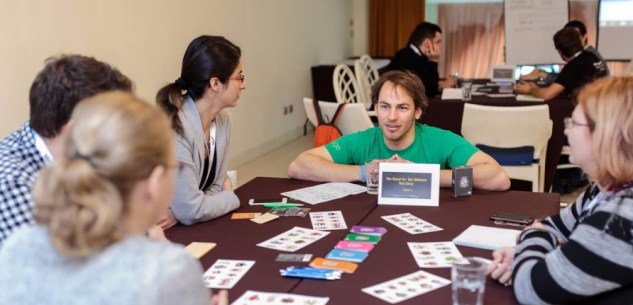
TestSphere’s workshop: “The Quest for the Ultimate Test Story” in action

The Romanian Testing Conference

Imagine being picked up at the airport in a very expensive Audi. Imagine the driver telling you he arranged a bike for you (you like biking, btw). Imagine that during the ride you oversee a valley filled with houses and old church towers but green hills all around. Imagine a slight hill in that valley with a grand hotel of marble on top.

That’s the first encounter I had with RTC. They had everything planned for me, the bike, the hills, the hotel, my evening dinner and the scenery was groteske. I mean that in the best possible way.

The conference itself was inside the many rooms of the hotel and for several days it was bustling with a 300-400 headed enthusiastic and diverse group of testers.
What struck me about this crowd is that it is much younger and much more evenly distributed across gender. And the hunger for knowledge… Dear lord were they thirsty.

The people I talked to were very eager to hear my stories, were inquisitive, well spoken and remarkable.

I am greatly impressed by the organisation, the participants and the group of speakers that assembled. I would be remiss not to mention I will fondly look back upon the time spent exploring the city with Ard Kramer & Elizabeth Zagroba and Nicola Owen, Mike Noggens, and Keith Klain.

C_pFjsZXcAEcmPC

Andrei Contan receiving his prize for telling the Ultimate Testing Story

Testing Cup

I’m a sucker for Poland. Over the last 3 years, I’ve visited these greener pastures a good 4 times. But this time I was reminded that I had been visiting some of the wrong sides. Gdansk is more modern than any other city I visited in Poland by a long shot.

Upon arrival in the old town I was rejoined with Zeger, Andreas, Ard, Marianne and Johan. From that point on, everything went into light speed. That was the moment the stars became white lines flashing in my peripheral view and the limits of the universe became in reach.

I didn’t look back.

dbyon5xwsaacpiq.jpg

It was the second year that Testing Cup grew larger than ‘just their testing competition’, which was incredible, make no mistake. Last year they experimented with several international speakers and this year they invited a larger group.
As a team we immediately set forth to gather all speakers in a whatsapp in a “got to catch ’em all” kind of style.
This medium was the center of much, much absurd humour and self mocking. I loved it. You may find a selection of shared pictures at the bottom of this post.

Much like in Romania, we found a large amount of young, knowledge-hungry and diverse selection of Poland’s best testers.
They demonstrated that in the competition and in our workshops with witty remarks and colourful stories.

Two particular moments will haunt me until years to come:

The party was a surge of positive energy. Having drinks on the beach, standing barefooted in the Baltic sea, enjoying the view of a spectacular fire show and dancing until well in the night in good company.
The party was amazingly good, which was noticed in the sheer number of attendees that trickled in much later than intended the next day.
The first day we had 40 participants (the cap) in our workshop, the second one we had 9.

Another impression about how greatly the attendees LIVED this conference was all the way in the end when the champions of the competition were announced.
I saw a Software Tester run in the middle of the Gdansk football arena waving a huge golden cup above his head. I imagine he felt like Ronaldo. His face showed pure pride and happiness. The crowd was enamored.

Aftermath

What I witnessed at both conferences was a strong organization and an exceptionally large number of volunteers. Even though it felt like they weren’t there, that’s exactly what their strength was. They supported us, carried us and led us to have the best of times. We didn’t have to worry about a thing.
That’s Joanna Mocko, Maciej Chmielarz, Andrei Contan, Andrei Ghinescu, Radek Smilgin for you.

As a speaker, I recommend these conferences with the highest of regards.
Say hi when you’re there. I will be too.

DCBnkCiXkAASuXt


The Core of Automation (Regression Checks)

Software Testing, The Core of Things

This is the first of a couple of “The core of X” -articles that give you -my- ideas on what I think of X. Take from it what you will, love it or take offence. In any case, I would love to hear about what goes around in your head and what you feel while reading. Feel free to correct me or engage in discussion. We’re here to learn.

First things first: Language. For this blogpost, when I say Automation I mean a set of Anti-regression checks. Whether they’re on the Unit, Integration, API, UI,… any level, they’re all the same here. There’s usefulness in dividing them by purpose, use or whatever, but it’s not here. I use ‘checks’ where you may expect ‘tests’. That’s fine. The important thing is the point, all else is for a different time.
Behold, das Point:


The core purpose of Automation is NOT about
finding bugs, saving time, getting to market faster or bringing value faster.
It’s about
Stability and Reliability.

Now don’t get me wrong. The red stuff is greatly helped by what’s in green, but it is not and should not be the main focus.

Should your project not care about Stability and Reliability and only about going to market faster or saving time, you can just as well not write any checks.
If you want to find as many bugs as possible, automation is a rather inefficient way of looking for them.

Your checks are about minimizing the risk that comes from working with multiple people on the same thing. Because… inevitably, someone will make an error. That’s human nature. Ideally, you want your Regression Harness (or Automation Check Suite) to warn you of that error. This way, when a team has a good set of checks, it’ll keep a personal “oopsie-doozie” from becoming a whole-team “WHO THE HELL BROKE OUR STUFF AGAIN?!”.

When you engage in any form of automated checking, know that your focus should be on Reliability and Stability. It will lead you down the good path. The one of continuous integration, saving time, having to do less firefighting and having more control as a team.

I’ve seen people talk about metrics of automation and mention: number of bugs found, time saved, number of deploys per day, number of checks ran,…
These are rather unhelpful.
As a Team member, when it comes to metrics, I’d love to outweigh:

Time lost fighting instability + Energy wasted on firefighting + motivation loss while investigating problems + friction between team members
VS.
Time invested in building a regression harness + problems still occurring after the effort + Effect on team-cohesion and sense of purpose.

Hard to do, right? Though it could be better worded, that’s the only metric that counts for me.
(Though I might be interested in the other metrics sometimes, those moments are rather circumstantial)
Notice, though, the difference of mindset of investigating problems as individuals and building a solution as a team.


But… where does Testing fit into that strategy? In my opinion: Not necessarily.

While Testing can certainly help come up with interesting ideas on improving your check harness, it doesn’t have to be part of it. However:

The information that Testing provides from looking for unexpected, extreme and abusing behaviour can greatly support your automation.

I do believe that Testers should make the occasional step into this territory, just as much as I encourage anyone to make frequent and valuable role-switches. Yet the main focus of the Tester role is on providing valuable information that might have been overlooked, the team was unprotected against or misunderstood.
Make no mistake, if your product is rather complex there’ll be things missed, erred and overlooked.

Also… I’ve yet to meet a tester who didn’t think her project or business is simple.


TL;DR:  Regression checking automation is about Stability and Reliability. When done well and consciously, the result can evolve to be: Less bugs, time saved firefighting & problem-solving, going to market faster and adding value faster. A Tester isn’t necessarily an agent in this process, but the information she provides can be invaluable.

IMG_20160725_125941We all need stability. Sometimes more than other times.
Concerned about boxes

Complaining, Software Testing

Trump, Brexit, Le Pen, The Testing Community, Women in IT, The future of Testers, LinkedIn articles and retweets.

Here’s what scares me the most about recent (and less recent) developments around these examples:

I don’t know who’s making all this happening.
Me, and almost everyone around me apparently share the same views.
Yet there’s an overwhelming number of people working against us.
Who are these people?
Why are their views different and why aren’t we hearing each other?

I often feel like I’m in a huge echo chamber. I keep getting the same things in my twitter-feed, slack channels, fora, mails, magazines,…

As a middle-class, white, European,… , non-religious,… , extravert, male, … , who tries (vehemently) not to be a dick, I look around and genuinely wonder: How could Trump ever get elected? Nothing in the media ever mentioned it to even be remotly possible.
I’m shocked that the UK voted “leave”, because I’d seen nothing but pro-stay voices all day. I’m getting a very one-sided view and it’s not helping anyone.

This happens every day:

  • I glance over a forum thread and think: “This discussion,… again?!”
  • Pull open a Slack channel and see someone replying: “What do you exactly mean by Test Cases?”
  • I click on a link about a new idiotic thing Trump did and can barely keep myself from screaming: “THEN HOW THE HELL DID HE GET ELECTED?!”
  • Open a “Testing is dead” article and find out that it actually means the opposite.

I’m seeing the same thing again and again. I wonder why nothing is changing.


There’s boxes everywhere: Racism is a problem. Sexism is a problem. Classism is a problem. Extremism, in all its different forms, is a problem. Most -isms are problems.
You’d think we’d all know by now. Hell, there’s enough examples to teach us.

But we like hearing the same thing. We like being right and having no conflicts.
Nice, simple, easy. Bliss.

After going through a very painful cynic stage, I realized that I need to get out of my echo chamber more. As much as I love the people near to me, it’s detrimental to all of us should we not pursue diversity. Even the diversity we may not like.

That’s what testing is, right?
Learning new things, new views, new ways of thinking, having a different mindset,
And using that information
To increase the chance of having better ideas, beliefs, thoughts for you
and people around you.

In my eyes, repetition, conformism,  truly is the enemy.
Everywhere.


An interesting thought I had whilst rereading: in our testing field, at least we’re having the discussions. We have various media which we can largely control. Fora, slack, twitter,… We should cherish that and draw upon its potential. Find the people we’re not hearing. Find out what they have to say… and learn.

IMG_20160804_124355

TestSphere, The Making Of

TestSphere

The day was 17th of April, 2015 that I mailed Rosie of Ministry of Testing with an idea I had. The question I posed was whether a Testing Tarot Card deck would be something the community would be interested in.

Rosie had thought of something similar before and wanted to work with me on it.

I wanted to create a tool that is generic enough to suit most contexts and can guide testers to find new and exciting ways to approach the product under test.
I started developing something that eventually took the form of a Testing Tarot set.
– Beren

(italics are snippets from actual conversations.)

Phase 1: A Testing Tarot Card deck. – April, 2015

So cards have two sides:
One side is always printed with one/same logo/design.
The other side is printed with the character.
– Rosie

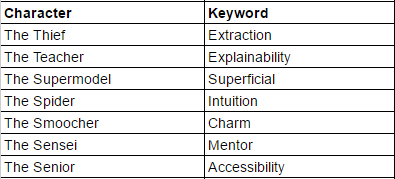
I had already created a list of concepts that would spark inspiration for your testing and connected this with a Tarot-style character.
This is an extract of how that looked:

list

Spreadsheet Keywords – Character – Image description

The next step was finding someone who could draw beautiful characters and designs for the cards.
After contacting several people, we found out that this would be very, very costly.
So we decided to go with someone from Fiverr.com who we’d heard good things about.


After completing about 20 drawings for us, she took 175$ and then vanished into thin air. We had less than half a card deck in a particular style which we couldn’t build on further.
Rosie had invested that money for nothing.

That was the first blow.site

Phase 2: The App – November, 2015

While waiting for the characters to come in, I had created a website to give a better overview of the card deck. This drove me into playing around with colours, logo, icons and a name.
Asking advice from people around me, I found someone who wanted to build this into an app.

To help inspire you, TestSphere doesn’t just give you an objective.
It offers an elaborate explanation of the objective and
gives several examples of how to test the objective.
– TestSphere pitch


At that point, we were a year later already. January 2016.
I hadn’t heard as much from Rosie as she was busy with the many other projects. In retrospect, she was right to do so, because I was still searching.
Even if I didn’t know that about myself at the time.


That same month, I was lucky to join 25 other testers on a peer conference: DEWT 6.
I pitched the concept, the website and the app to them.
They felt it had potential, but that it wasn’t quite there yet.

While they were offering constructive criticism, help, support and ideas, I was feeling demoralized. A stone had formed in my stomach.

That was the second blow.

Phase 3: The Card Game – Februari, 2016

Driving home again, I started to get new ideas. Back to basics. A card deck that wasn’t a fluffy fortune telling game, but a useful tool of learning and knowledge sharing.

Again I rethought the list of concepts, form and design of the card deck.
I introduced different dimensions and investigated more concepts to add to the deck. Real, useful and specific test related concepts that have the potential to get testers passionately talking and thinking.

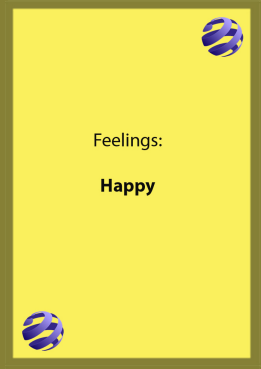
Here’s an example of 9 cards of the first version of TestSphere: pat-3

happycard3

more-concepts

The focus shifted from fortune telling and test ideas to learning and knowledge sharing.


I pitched the new idea at TestBash Brighton as a 99-second talk and that was the moment it got picked up in earnest.
Rosie wanted to get it ready for TestBash Manchester. Marcel Gehlen tested out the game and offered a boatload of feedback.

In total: We liked the cards very much, we have some ideas how we can integrate them in our team / work and we think they add value. For gaming purposes we wanted more rules. If you ever come up with a stricter gaming rule set we are happy to try that out for you.
– Marcel Gehlen

Phase 4: TestSphere – Oktober, 2016

We further expanded on the cards, with examples that approach the concepts from different angles.
A real designer from MoT, Thomas Harvey, joined in and made it look awesome.

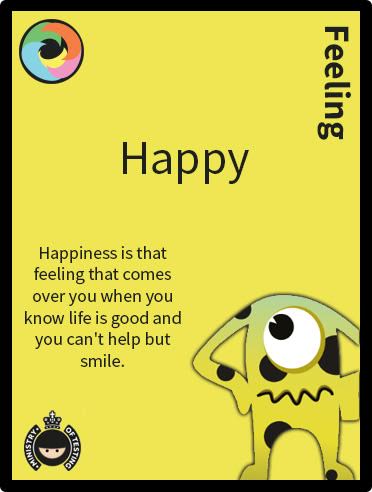
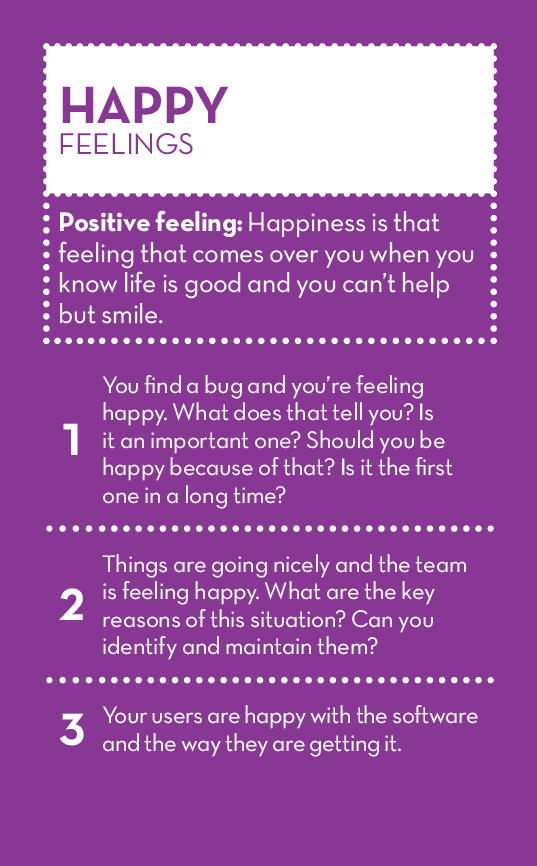
3-feelings23-feelings21

This is a product that can be used in many different ways and taps into your experiences, potential and creativity.
Whether you are an experienced developer or junior tester, this game will have you dig deeper and learn from each other.

TestSphere brings out the potential in you.


Phase 5: The Crowdfunding platform – Januari, 2017

We’ve come this far together. All the people who stood by me, supported me and offered advice and work:

Rosie, Marcel Gehlen, Melissa Eaden, Thomas Harvey, Dwayne Slootmans, Bert Lerno, Ben Van Daele and my wife.

Ministry of Testing have invested £20,000 for design, printing and handling.
In order to make that money back, we’ll need to sell about 1,000 card decks.
At the moment of writing, we’ve sold 220.

You can help us take this story further.
Inform your manager, your development team, your marketing team. Get them excited about TestSphere.

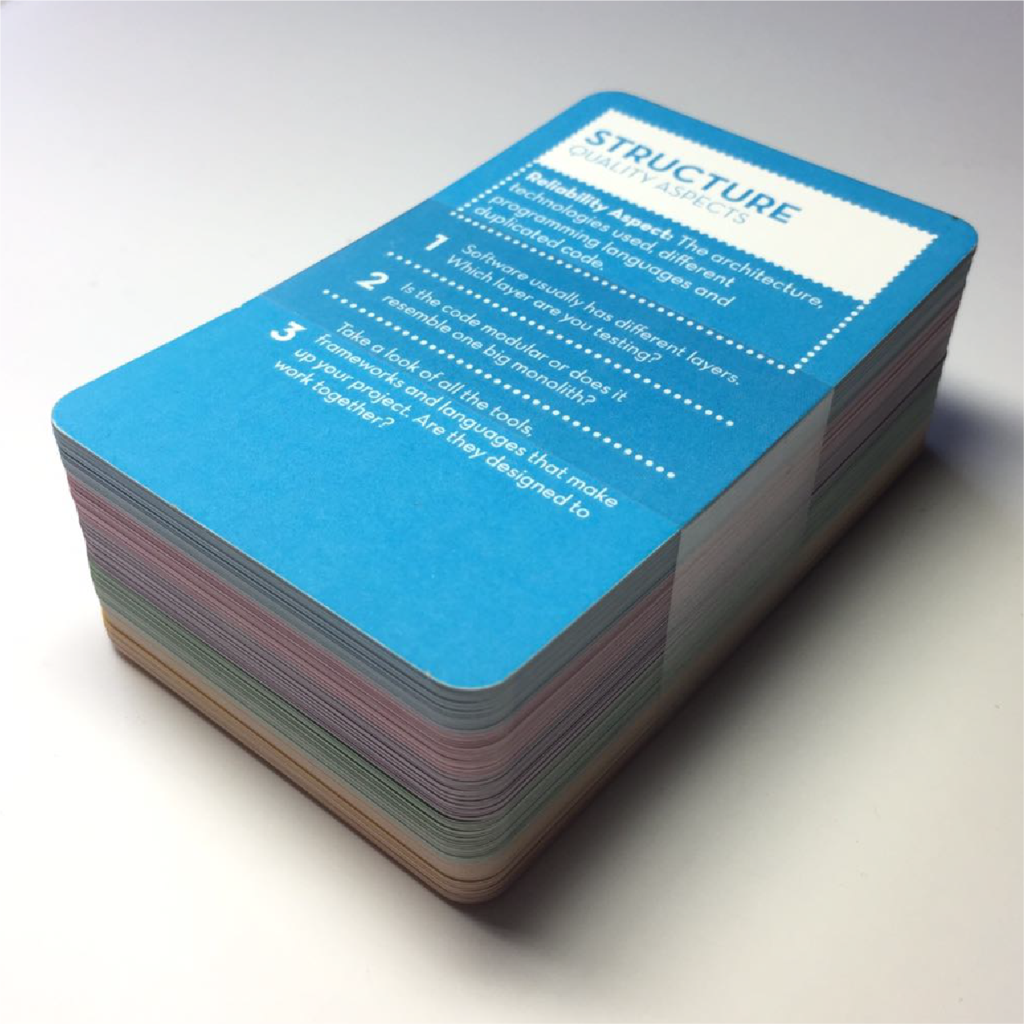
Get it at the Ministry of Testing Store.testsphere-15_1024x1024

Phase 6: ???

The App, revisited?
An extension on the Ministry of Testing Dojo, a great library of real life stories?

All we know is, this is far from over. We’re taking this further!